Wind Tunnels, Bus Stops and One Perfect Brick Corner: A Busker's Map of Bristol
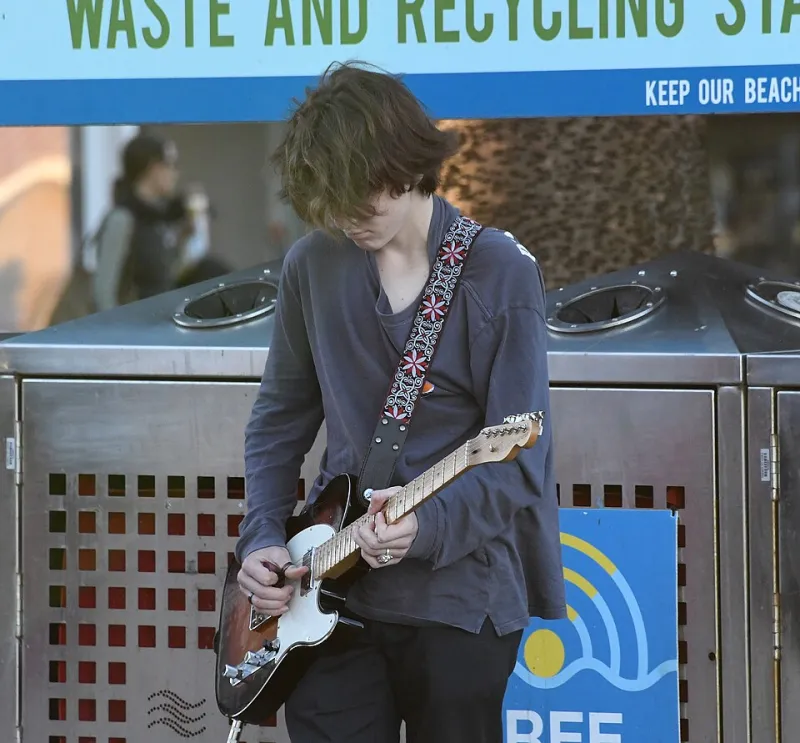
Photo: Sardaka, CC BY-SA 4.0, via Wikimedia Commons
Every city has a secret hierarchy of pavements, and only the people standing on them know it. Ask a Bristol busker where to play and you won't get a list of landmarks. You'll get a list of corners: which one catches the lunchtime crowd, which one has a doorway that turns a guitar into a small cathedral, which one is a wind tunnel that eats your hat and your low end in the same gust.
So we asked. Six pitches, ranked, argued over, and scored out of ten on four things that matter: footfall, acoustics, shelter and wind resistance.
One caveat before we start, and we mean it: rules change, wardens change, and the council's guidance is the only version that counts. Check it before you unzip a case, and if a trader or a resident asks you to shift, shift. The pitch will still be there tomorrow.
1. The arch at the top of Gloucester Road — 34/40
Footfall 8, acoustics 9, shelter 9, wind 8.
This is the one. A deep brick arch with a curve that throws sound back at you and out across the pavement, and enough overhang that a drizzle doesn't end the set. Saturday footfall is relentless — shoppers, dog walkers, people carrying flat whites like religious objects. The trick is to set up slightly inside the arch rather than at its mouth; two metres further in and you gain a whole free reverb unit.
Etiquette note: the independent traders along this stretch have been extremely decent to musicians for years, and that goodwill is a finite resource. Don't block a doorway. Don't play directly at a shop's open front. And if the florist is doing a delivery at nine, she wins.
2. Pero's Bridge and the Harbourside — 31/40
Footfall 10, acoustics 6, shelter 3, wind 6.
The busiest pitch in the city and the most punishing. On a still summer evening, with the water carrying sound out across the floating harbour, it's genuinely lovely. On a Tuesday in November it is a wind machine designed by someone who hates fiddles. Bring pegs. Bring a heavier stand than you think you need. Bring a second hat.
Acoustically it's a strange one: the hard surfaces bounce everything, so quiet fingerpicking vanishes while a strummed acoustic becomes enormous. Buskers who work this pitch tend to lean loud. It's also the pitch most likely to attract a crowd that films you instead of paying you, which is its own economic model.
3. College Green — 29/40
Footfall 7, acoustics 8, shelter 6, wind 8.
The green is the connoisseur's choice: a natural amphitheatre of grass and stone steps where a decent voice carries without amplification. It's sheltered from the worst of the westerly, and the benches give you a seated audience, which is worth more than it sounds — seated people stay for three songs instead of one.
Downsides: it's a gathering spot, so you're competing with conversations, skateboards and the occasional amplified rally. If there's a PA already set up for something else, walk on. There's a difference between busking and gatecrashing.
4. Corn Street and St Nicholas Market — 27/40
Footfall 9, acoustics 7, shelter 5, wind 6.
Cobbles, colonnades, and a five-thirty surge of office workers who are briefly the most generous audience in Bristol. The Exchange building gives you a big, echoey slap-back that flatters brass and punishes anything fast and intricate — play something with space in it and the architecture does the work.
The shelter is patchy at best. The colonnade works in light rain; anything heavier and you're moving to the market's edge. Weekends are busy but the crowd skews towards browsing rather than listening. Weekday early evenings are the sweet spot, and almost nobody uses them.
5. Temple Quay — 23/40
Footfall 6, acoustics 9, shelter 7, wind 5.
The underpass effect. Stand in the right spot and a single voice sounds like four of you, which is either a gift or a lie depending on your setlist. Weekday lunchtimes bring a steady stream off the trains, and they're moving fast but they're in a good mood.
Weekends, it's a ghost town. Genuinely eerie. This is the pitch for someone who wants to rehearse in public rather than earn in public, and there's nothing wrong with that. Worth knowing: the echo flatters slow songs and turns fast ones into soup, so pick your material accordingly.
6. The top of Park Street — 18/40
Footfall 8, acoustics 4, shelter 2, wind 4.
Look, we had to include it, because everyone tries it once. The footfall is excellent, the tourists are there, the view is nice. But Park Street is a slope with a wind problem, and the traffic noise from the bottom eats anything under a certain volume. Your carefully arranged quiet verse will be soundtracked by a bus.
It's also the pitch where you're most likely to be moved along, simply because it's busy and narrow and the pavements aren't wide enough for a crowd and a buggy. Treat it as a busking dare, not a residency.
The unwritten rules
Every busker we spoke to mentioned the same handful of things, and none of them are on any official page.
The pitch belongs to whoever's on it. Not forever, but for now. Don't set up within earshot of another act; if you can hear them clearly without trying, you're too close. If you want the arch, get there early and accept that early is a relative term.
Forty minutes, then a wander. Most pitches work better as a short set than a siege. Play your best three songs, let the crowd turn over, come back later. The people who tip are usually the ones who arrived mid-song and stayed.
Tip visible, tip honest. A jar with a couple of coins already in it does better than an empty one. Nobody's pretending the psychology isn't psychology.
Amplification is a negotiation, not a right. Some areas are relaxed about it, some are not, and some are relaxed until the third complaint. Turning down when asked costs you nothing and buys you a future.
Watch the traders. Market delivery windows, bin collections, the bloke who needs to get a van through a gap you've made narrower. Move before you're asked and you'll be remembered kindly.
And the thing all six pitches have in common: the best one isn't the busiest. It's the one where the room — pavement, arch, underpass, whatever it is — does something for your sound that you couldn't do on your own. Find that, and a wet Tuesday in February becomes a gig.