The Window Seat: Bristol's Late-Night Shops Are Booking Acoustic Sets Behind the Glass
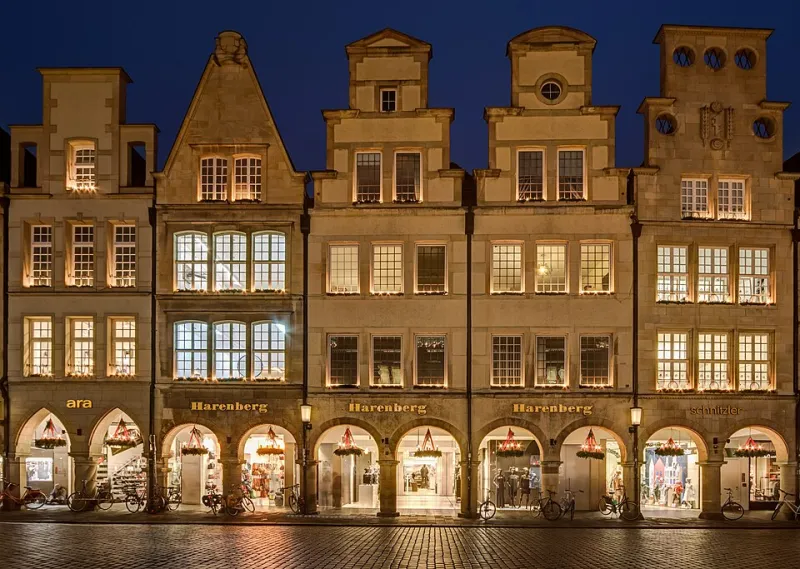
Photo: Dietmar Rabich, CC BY-SA 4.0, via Wikimedia Commons
It is 6.40pm on a Thursday in December and a bookshop on Gloucester Road has rearranged itself. The poetry shelf has been shuffled a foot to the left, a stool is wedged between the till and the glass, and a woman with a classical guitar is playing to roughly eleven people — seven inside, four on the pavement, one of whom is a dog in a coat. The set will run fifteen minutes. Then the shop goes back to being a shop and everyone buys something out of politeness.
That is the entire proposition of Bristol's shop-front gigs this winter: brief, free, lit like a fish tank, and finished before the cold gets into your shoes. Across Gloucester Road, Stokes Croft and Bedminster, independents are staying open late through December and putting a musician in the window instead of a mannequin. No tickets, no wristbands, no support act. You turn up, you listen to three songs, you might leave with a paperback.
Why a lit window beats a dark room
Small gigs in Bristol have spent a decade looking for intimacy in cellars. Shop windows offer it for free, and they do several things a basement venue cannot.
- You can see the performer's face. No haze machine, no red wash, no bloke standing in front of you filming on a phone held at head height. A window is a frame, and the frame does the work a lighting rig normally does badly.
- The street is the foyer. Nobody is checking your bag at the door. If the second song does not land, you walk away and lose nothing. That freedom makes people far more generous listeners than a £12 advance ticket does.
- It is genuinely all-ages. Kids on shoulders, dogs, people who do not drink, people who have to be on a bus by 8.30. The audience looks like the street it is standing on rather than the usual gig-going demographic.
- The room is honest. You hear the guitar, the room hum, the till drawer, a bus going past. Fifteen minutes of that is more memorable than forty minutes of a band fighting a PA.
The trade-off is obvious: no atmosphere to hide in, no bar takings to subsidise the booking, and a hard stop when the shop needs to lock up. Which is roughly why it works.
Gloucester Road: the long, well-lit counter
The Gloucester Road strip is the most reliable of the three, mostly because the shops there have been doing late Thursdays in December for years and already know how to keep a doorway clear. Expect sets from about 6.30pm, again around 7.30, and a last one near 8.30 in the bigger units — the bakery with the folding tables, the bookshop near the railway bridge, the bike shop that clears a space by the workshop bench and always ends up with a fiddle player.
Nothing is ticketed. The schedule tends to be chalked inside the door or posted on the shop's own account the day before, which means the reliable move is to walk the road rather than plan around one listing. The 75 and 76 run the length of it if the weather turns.
Stokes Croft: shorter, rowdier, more likely to be a snare drum
Over towards Stokes Croft the sets get shorter and stranger. A record shop window might host a two-piece with a snare and a synth; a café might push the tables back and put a poet on before the music. Sets run closer to ten minutes here and the pavement crowd is bigger, which makes the etiquette bit below more important than usual.
Bedminster: North Street does Saturdays
In Bedminster the pattern shifts to Saturday afternoons and early evenings rather than Thursday nights — North Street cafés and the smaller units off East Street, with a lot of solo singers and the occasional brass duo. It is a gentler watch than Stokes Croft: more room on the pavement, more families, more chance of a shop handing out mince pies.
Pavement etiquette, or how not to ruin it
A shop window is not a venue and the pavement is not a standing area. A few rules that venues never have to write down but shops quietly wish they could:
- Stand to the side of the window, not pressed against it. Nose-to-glass looks like a burglary in progress and blocks the only sightline everyone else has.
- Keep the doorway and the crossing clear. Shop staff still need to move stock, and wheelchair users need the kerb.
- Watch a couple of songs, then move on. Fifteen minutes is designed for exactly this. Loitering for the whole night defeats the point.
- No flash, no full-set filming. A quick photo is fine. Holding a phone above your head for twelve minutes is not.
- Buy something if you can. A card, a coffee, a paperback. The musician is usually paid by the shop, but the shop is paying out of goodwill and December takings.
- Do not ask for an encore. The shop has to close.
The practical bits
Everything is free and nothing is bookable, so the plan is a walk rather than a schedule: start at one end of Gloucester Road around 6pm on a Thursday, or North Street on a Saturday afternoon, and follow whatever has a stool in the window. Wrap up warm, take cash for the smaller places, and check the shop's own feed on the day — line-ups move at short notice because someone's guitarist has a shift.
And if you only catch one song before the bus, that is fine. Three chords through a shop window in the cold is a proper night out in this city, and it costs exactly nothing.