Laundrettes, Allotments, Bus Garages: Five Bristol Residencies Doing the Quiet Work
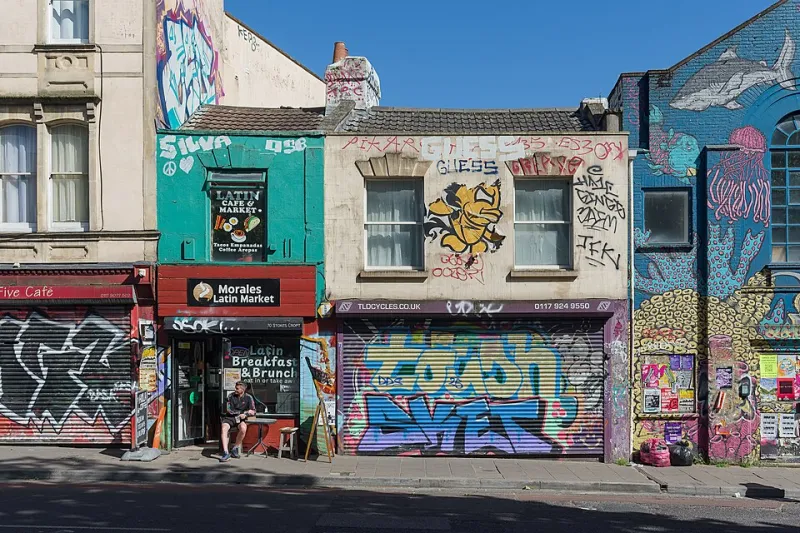
Photo: Gil Marco Shani, CC BY-SA 4.0, via Wikimedia Commons
Bristol's cultural calendar is loud. Festivals, warehouse takeovers, headline shows, the whole apparatus. But underneath all of that, a quieter layer of work is happening in spaces that were never designed for art — and a lot of it is genuinely more interesting than what's on the gallery walls.
Here are five residencies currently running or returning across the city. Some are drop-in. Some need an email first. All of them are worth knowing about.
1. The Spin Room — a listening room in a working launderette
Where: Easton, off Stapleton Road What it is: A monthly Saturday afternoon residency that takes over the back half of a working launderette. A portable turntable, four chairs, a decent pair of speakers, and a rotating host who plays a full album front to back while the washing machines do their thing.
Who it's for: Anyone, genuinely. Half the audience is people waiting for a spin cycle. The other half has started turning up on purpose.
How to get involved: Just walk in during opening hours on the advertised Saturday. No ticket, no booking. If you want to host a session, the organisers take proposals by email — they're particularly keen on hearing from people who've never programmed anything before.
Why it matters: It's the least exclusive music event in Bristol. Nobody is checking your credentials at the door because there isn't a door. The residency proves that an audience is a thing you can find rather than a thing you have to build.
2. Plot Sessions — an allotment recording project
Where: An allotment site in Horfield What it is: A summer-to-autumn residency that turns a shed and a polytunnel into a field recording studio. Artists are invited to spend a fortnight working with the sounds of the site — tools, water butts, birdsong, a radio left on in the next plot — and come out the other side with a short piece of music or sound work.
Who it's for: Musicians, sound artists and producers, with a deliberate mix of established names and people making their first thing. Two of the six places each cycle are reserved for allotment holders themselves.
How to get involved: Applications open each spring. The finished pieces get played at a late-afternoon listening session on the site in September, which is open to anyone who can find the gate — and they will send you a map.
Why it matters: Residencies usually mean a studio and a budget. This one means a shed and some weather. The results are stranger and warmer than most things made in rooms with acoustic treatment.
3. Depot Press — a print studio in a bus garage
Where: Lawrence Hill What it is: A printmaking residency in a corner of a working depot, run in the hours when the buses are out on service. Screen-printing beds, a risograph that's older than most of the participants, and a lot of industrial light.
Who it's for: Printmakers, illustrators, poster designers — and, crucially, anyone who wants to make a banner, a zine or a flyer for something they're already doing. There's a standing open-access slot on Wednesday evenings.
How to get involved: Book the open-access session online. The full residency is a six-week block, applications twice a year, and there's a modest materials stipend. Expect to be asked to leave the floor cleaner than you found it.
Why it matters: Print is having a moment and Bristol has the infrastructure for it, but the costs of a commercial studio shut out exactly the people making the most interesting flyers, posters and protest material. This one doesn't.
4. The Dark Room at the Settlement — photography in a community centre
Where: Bedminster What it is: A photography residency in a community centre basement, built around a properly dark darkroom and a not-particularly-dark storage cupboard. Residents get eight weeks, chemical access and a key, in exchange for running two free Saturday workshops for local residents.
Who it's for: Anyone working in analogue photography, from teenagers on their first roll to people who've been printing for thirty years. The exchange element — two workshops, no exceptions — is the whole point of the thing.
How to get involved: Email the centre for the next application window. The end-of-residency show is hung in the centre's corridor and canteen, which gets more foot traffic than most galleries in the city centre.
Why it matters: It's the clearest example in Bristol of a residency designed to leave something behind. Every participant teaches. The darkroom stays.
5. The Radio Counter — a shop-counter broadcast residency
Where: St George What it is: A short-term residency in a small corner shop, where the counter doubles as a broadcast desk for a fortnight. Residents produce live shows, interviews and sound pieces rooted entirely in the high street — the butcher, the barber, the woman who's run the post office for twenty-two years.
Who it's for: Radio producers, podcasters, oral historians and anyone curious enough to sit and listen. No broadcast experience required for the volunteer roles, which mostly involve making tea and taking notes.
How to get involved: Shows go out live and are usually listenable in the shop itself. Drop in and ask. Volunteers are recruited on a rolling basis, and turning up with no plan whatsoever is considered a perfectly good way to start.
Why it matters: Bristol's cultural story tends to get told from the centre outwards. This one inverts it. The archive it leaves behind is made of ordinary voices, recorded properly, with consent and care.
Why the small stuff carries the weight
None of these five will make a 'best of the year' list. That's not a knock — it's the mechanism. Residencies like these do the work that headline events can't: they give people time, they share equipment, and they leave skills in a building rather than just memories of a good night out.
They're also the reason Bristol's creative ecology survives at all. A city where the only opportunities are the big, funded, high-profile ones is a city that slowly runs out of people. The launderette listening room and the allotment recording shed are, in their own small way, the pipeline.
Worth knowing before you go
- Always check before travelling. These are small operations run on goodwill and are sometimes paused for a season.
- Respect the day job. If a residency is in a working launderette, garage or shop, you're a guest in someone's business. Buy something.
- Ask the daft question. Every organiser we've spoken to says the same thing: people assume it's not for them. It usually is.
- Follow through. A residency that runs for six weeks doesn't need an audience on week one. It needs one on week five.