One Credit, Three Chords: Bristol's Arcades Are the Oddest Gig Rooms of the Winter
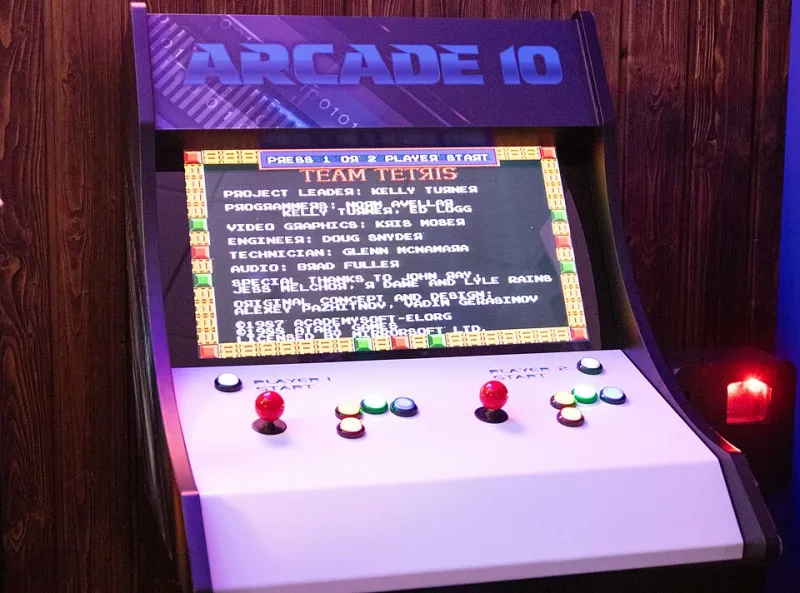
Photo: Hubert Tkaczyński, CC BY-SA 4.0, via Wikimedia Commons
There is a hill I am willing to die on, and it is the bit of carpet between the change machine and the Pac-Man cabinet. Bristol's arcades, bowling alleys and games bars have quietly started booking chiptune DJs and 8-bit live sets this winter, and the result is a better small gig than most of the purpose-built rooms in the city centre. Not because the sound is better — it is often not — but because of everything the room already is before the music starts.
The argument: a cabinet does what a PA cannot
Chiptune has always been venue-agnostic. A Game Boy with a flash cart and a nanoloop file does not need a stage, a monitor desk or a soundcheck longer than four minutes. What it needs is a room that gives people a reason to be standing close together, and an arcade gives that away for free.
- The floor plan puts you beside the act, not below them. There is no stage. The performer is at a table with two handhelds and a mixer, roughly at eye level, hemmed in by racing cabinets. That is a more intimate arrangement than any club with a 60cm riser.
- The cabinets are acoustic treatment. Low ceilings, carpet, rows of soft-cornered machines and bodies hunched over them. Every chiptune night I have stood in has had a warmer, less painful top end than the equivalent basement show, purely by accident of architecture.
- The games give hands something to do. The thing that kills small gigs is a crowd with nothing to occupy them but standing and drinking. Feed a coin slot and people stay for the whole set instead of drifting to the smoking area.
- Tokens are a fairer ticketing system. Five pounds in tokens buys you a set, three goes on something with a steering wheel, and no booking fee. Try asking a club to match that.
Five rooms where the games are the support act
A short, unranked trail of arcade-floor bookings happening this winter. Line-ups move, so check the room's own boards on the day.
1. The bowling alley, Fishponds
Lanes stay open until late, the DJ sets up near the shoe desk, and from about 8pm there is a live 8-bit set that competes — cheerfully, and not always successfully — with the sound of a strike. Entry is usually a lane booking or a few pounds on the door. The advantage: a genuinely mixed crowd, families at one end and chiptune heads at the other.
2. The games bar off Welsh Back
A basement, forty-odd cabinets, and a token bar that takes a fiver and turns it into a small plastic cup. Two cabinets get switched to free play for the night. Sets run short — twenty minutes, sometimes less — and the room is small enough that the set essentially happens in the middle of the floor. Arrive before the first set or you are watching from the stairs.
3. The arcade on Baldwin Street
Saturday nights, roughly 7pm to 11pm, entry around six pounds or twelve tokens, whichever you prefer. The most conventionally gig-shaped of the lot: a proper PA, a projector, and a DJ set between the live slots. Loudest of the five, and the one most likely to sell out on a Saturday.
4. The pinball place in Bedminster
Sunday afternoons, which is a bold slot for music and turns out to be the best-attended of the lot. Four pounds in, all ages, and a rule that the machines in the back half stay unmuted. If you want to hear a full chiptune set with a nine-year-old nodding along next to you, this is the one.
5. The café-bar on Church Road
Twenty people maximum, hand-held consoles, no PA at all. The quietest booking on this list and, for my money, the one to catch. It is the closest thing the city has to a listening bar where the record decks are Game Boys.
The token economy
Pricing across these nights lands between free-with-a-drink and about eight pounds, with the token-cup option usually the best value if you intend to play as well as listen. Compare that to a club night, add the booking fee, and the arcade wins on cost before you have touched a cabinet.
What you do not get: a cloakroom worth the name, a dancefloor, or any guarantee the person next to you is listening rather than chasing a high score. Which brings me to the caveats.
The catch, honestly
Cabinets do not know a set is happening. A racing game at full volume will flatten a quiet chiptune passage, so ask the host which machines are muted and be the person who respects it. Take earplugs — the room's baseline noise is higher than a venue's, and you will be in there for three hours. And accept that nobody dances at these nights. That is not a failure of the format; it is the format. The point is to stand next to a machine, listen to a Game Boy through a decent PA, and remember that a gig can happen anywhere with a plug socket and a bit of carpet.